


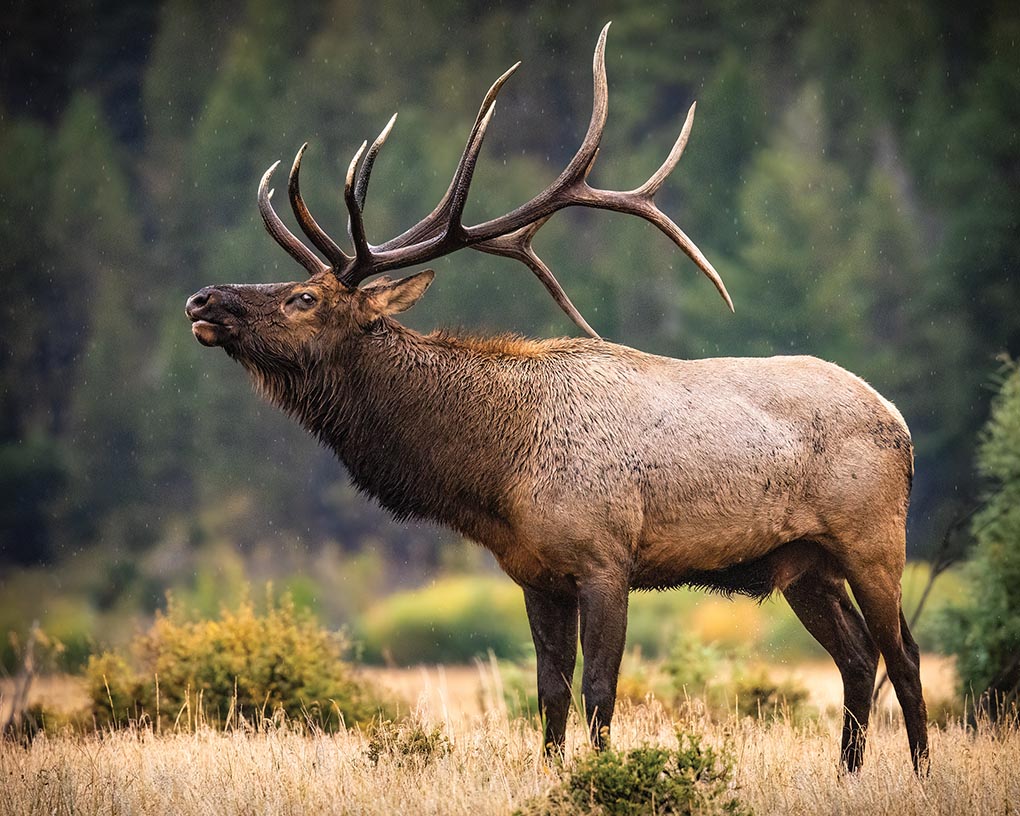
One of the coolest things you can do on the Boone and Crockett Club website is be able to search records for the highest-scoring North American big game by state or province.
Spanning some 140 years and 39 species categories, the B&C’s Big Game Records 2.0 takes the world’s oldest big game records database and turns it into an interactive tool for hunters and others who admire trophy animals.
While the original platform allowed users to search the Club’s archives, the new tool integrates a dozen proprietary, data-driven analysis tools designed to identify trends, isolate geographic biological hotspots, and evaluate environmental variables.
The centerpiece of the new subscription-based platform is the built-in “Research Assistant,” an AI-powered research agent trained on the Club’s data and equipped to use advanced search tools to explore the archives. Users can type questions, and the platform instantly cross-references more than 50,000 official trophy entries, historical weather info, and other variables to deliver data-backed answers.
“For nearly a century, the data collected through our records program has served as a vital indicator of wildlife health and habitat quality,” said Kyle Lehr, Director of Big Game Records for B&C. “With version 2.0, we are putting the full weight of that data directly into the hands of the public. This platform allows hunters to research our records anytime, anywhere.”
In addition to the AI Research Assistant, the updated interface features enriched data profiles for individual entries, including digital copies of official score charts, shot distances, and specific calibers or weapons used. Thousands of vintage and modern field photographs have also been integrated into the database.
The platform’s 12 core sub-tools allow users to cross-reference data, with an enhanced trophy search, state and county ‘heat’ maps and a whole lot more.
Big Game Records Live 2.0 is mobile-optimized for field use and is available via monthly ($12) or annual ($100) digital subscriptions. To learn more, visit https://www.boone-crockett.org/bcs-big-game-records-live-20?v=5531.

Rockfish Study
Oregon’s Marine Fisheries Research team headed out to sea last weekend to search for old female rockfish, particularly black, canary and yellowtail rockfish.
The team, along with two collaborators from Oregon State University left Newport Aug. 1 for Cobb Seamount, an inactive underwater volcano, 322 miles west of Oregon’s north coast.
The three fish species are unique because, as they get older, most of the population are males. Scientists have also found that older fish are rarely caught in commercial or recreational fisheries. This raises an important question: where are these older female fish? One possibility is that they move to offshore seamounts.
This unusual pattern also raises another important question: are older female fish still alive and able to reproduce?
If scientists cannot determine whether these older females are still part of the breeding population, it becomes much harder to estimate how many young fish will be added each year.
It will take the team two days to get to Cobb Seamount, and they will spend two weeks conducting research. Cobb Seamount is an ideal place for this research with its biological diversity that supports extensive fish populations, mostly various rockfish species.
The team will use scientific fish finders and underwater video cameras to count rockfish species, along with hook and line gear to sample fish for length, age, genetic samples and stomach contents. A small number of black rockfish (or canary or yellowtail if caught) will get satellite tags to learn if the fish are moving among seamounts or between seamounts and the nearshore.
Once data is collected, researchers could have results in approximately six months.
The Farm Bill
If we think of it at all, I’d bet most of us think of the Farm Bill as a relic of the Dust Bowl: a 90-year-old bill providing money for farmers and guidelines for soil conservation. But it’s much more than that.
It’s the “most important legislation” for conserving, managing and restoring private lands in the United States, says Jenny Conner Nelms, associate director of legislative affairs at The Nature Conservancy. It has a major impact on American supply chains, too, she says, incentivizing businesses to work in more environmentally friendly ways.
The last bill included around $6 billion a year for things like protecting watersheds, sustaining forests and addressing climate change.
Avian Influenza
Avian influenza, sometimes simply called “the bird flu,” remains an ongoing concern for ducks and many other migrating aquatic birds.
If you suspect a sick or found-dead bird, don’t touch it, and keep dogs away from them. It’s a good idea to wear rubber gloves when handling game, and always wash hands and equipment thoroughly after field-dressing. The current strain of bird flu has not been shown to pose a food safety risk. However, hunters should cook harvested birds to an internal temperature of 165°F.