

Outdoors, Sports

Trout Unlimited Opening Up Streams For Fish

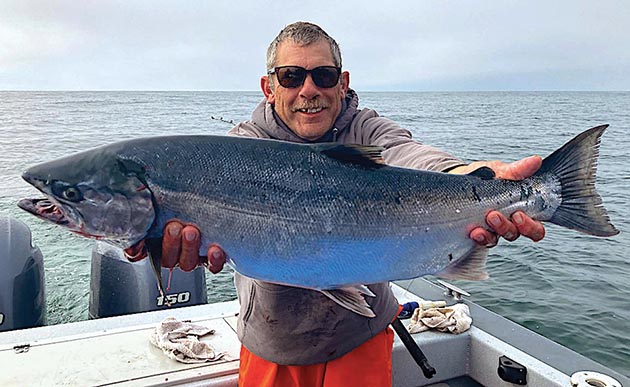
Oregon angler Jim Anderson displays a wild Oregon Coast coho salmon. Photo by Lance Kruzic/NOAA Fisheries.

Thanks to funding from the National Oceanic and Atmospheric Administration (NOAA), Trout Unlimited is opening up streams for migratory fish across coastal watersheds in Oregon.

One of the most ambitious salmon restoration projects on Oregon’s North Coast, the Salmon SuperHwy is an unprecedented effort to restore access to almost 180 miles of blocked habitat through six major salmon and steelhead rivers.

Using a strategic, scaled approach, the partnership aims to deliver a portfolio of 93 projects. As of this spring, it had already reconnected more than 75 percent of the habitat while reducing chronic flooding, improving recreation opportunities and stimulating the local economies.

One of the biggest beneficiaries of coastal restoration work are threatened Oregon Coast coho salmon. They’re experiencing a dramatic rebound.

Since 2021, an average of more than 150,000 Oregon Coast coho have returned annually to coastal rivers and streams. The Pacific Fishery Management Council predicts another strong year for 2026, estimating an ocean abundance of 219,000 wild coho.

NOAA Fisheries has supported salmon habitat restoration in the region since 2015. Currently, Trout Unlimited is leading a series of projects to improve fish passage at 14 sites across the region with funding from the Office of Habitat Conservation. Seven projects are complete, with the remaining expected to be finished by 2027.

Together, these projects are reconnecting 37 miles of habitat for Oregon Coast coho, Chinook, and chum salmon, steelhead, cutthroat trout, and Pacific lamprey.

The Salmon SuperHwy project also removes barriers or replaces failing structures with modern, fish-friendly designs.

“We’re opening up juvenile rearing habitat so fish can get bigger, and also opening up spawning habitat so the bigger fish can find spawning gravels higher up in the watershed,” said Liz Ransom, Trout Unlimited’s Salmon SuperHwy director. “Having a whole stream functioning as it should improve population numbers.”

Juvenile Oregon Coast coho spend more than a year in freshwater before migrating to the ocean. Removing barriers allows young fish to move freely up and down streams. They can find sheltered, slow-moving areas like side channels and floodplains where they can eat, grow, and avoid predators and the hot summer sun.

The population of Oregon Coast coho is now large enough for recreational anglers to harvest some. In 2024, anglers took home more than 40,000 wild coho.

The Salmon SuperHwy has invested more than $20 million in the region and created more than 340 jobs. For more on the project, visit https://www.salmonsuperhwy.org/.

A black-tailed deer fawn lies low, and still, to avoid detection by predators. Photo courtesy of ODFW.

Leave ‘Em Wild

In most cases, it’s best to leave young animals where you found them. Regardless of a person’s intentions, removing young wild animals from their natural environment drastically reduces their chance of survival. It could also lead to a warning or citation from the Oregon State Police, since it is illegal to remove an animal from the wild under Oregon wildlife laws.

In spring and early summer, ODFW offices, licensed wildlife rehabilitators, and even Oregon State Police are flooded with calls from people who picked up a deer fawn, elk calf, fledgling bird learning to fly, or other young animal they assumed was orphaned because it was alone.

Even if these animals receive care from a licensed wildlife rehabilitator, successfully returning a young animal to the wild is not always possible. Options for long-term placement in wildlife sanctuaries or zoos are limited, and animals often must be euthanized if they lack the survival skills to be released back into the wild. Some animals raised by people can also become dangerous as they grow into adults and pose a serious threat to human safety.

Learn more about the reasons behind leaving wildlife in the wild at https://myodfw.com/articles/leave-young-wildlife-wild.