





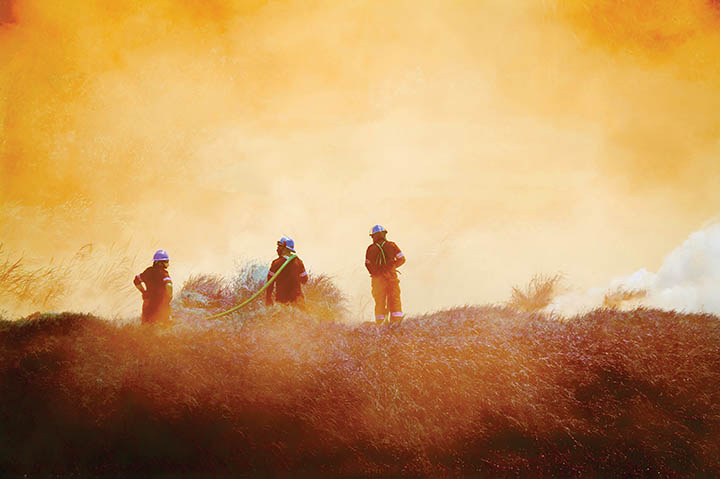
Firefighters continue making steady progress on several Oregon wildfires as containment increases and crews focus on reinforcing fire lines, protecting homes, and extinguishing lingering hot spots.
Recent favorable weather conditions, combined with the tireless work of hundreds of firefighters, have allowed incident management teams to strengthen established containment lines while reducing the threat of new fire growth. Although active flames have diminished in many areas, officials caution that fire season is far from over.
Current firefighting operations are centered on “mop-up” work—locating and extinguishing burning stumps, logs, roots, and other hidden heat sources that could reignite if conditions become hotter, windier, or drier. Crews are also removing hazardous trees, repairing fire lines, and monitoring sections of the fire perimeter where heavy fuels continue to smolder.
Structure protection remains a priority in communities located near active fires. Firefighters are continuing patrols around homes, businesses, utility infrastructure, and transportation corridors to ensure containment lines remain secure.
Even as containment percentages improve, fire officials remind residents that a fire listed as “contained” is not necessarily extinguished. Containment means firefighters have established and secured fire lines around portions of the fire’s perimeter, reducing the likelihood of further spread. Crews often remain assigned to an incident for days or even weeks after containment increases to eliminate hot spots and prevent flare-ups.
Forecasts calling for continued warm temperatures, low humidity, and occasional gusty winds mean firefighters will remain vigilant throughout the coming days. Incident commanders say weather conditions can quickly change fire behavior, making continued monitoring essential even after significant containment gains.
Officials encourage residents to stay informed by following evacuation notices, respecting road closures, and avoiding travel into active fire areas unless absolutely necessary. Public cooperation allows firefighting resources to remain focused on suppression efforts and community protection.
With Oregon entering the heart of wildfire season, emergency managers remind homeowners to maintain defensible space around structures, prepare emergency evacuation plans, and register for local emergency alerts.
Fire officials thanked local communities, volunteers, and partner agencies for their continued support throughout the wildfire season, noting that public cooperation remains an important part of keeping firefighters and residents safe.
Reach Publisher Teresa Pearson at [email protected].