



Imagine answering the telephone and hearing your grandson’s voice.
“Grandma, I’m in trouble. I’ve been in an accident. Please don’t tell Mom and Dad. I need money right away.”
He sounds frightened. He may be crying. He knows your name. Most frightening of all, the voice sounds just like him.
But it may not be him.
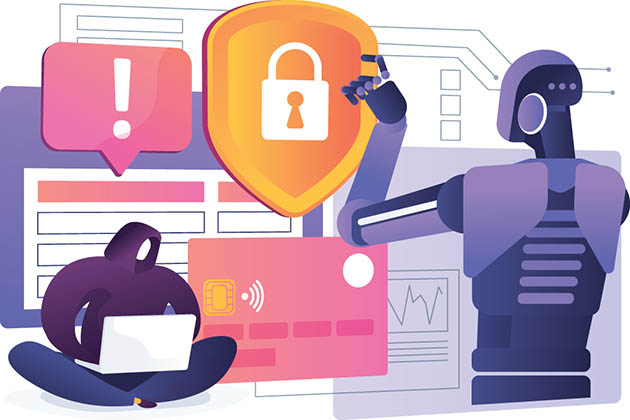
Artificial intelligence is giving criminals a powerful new tool: voice cloning. With AI technology, scammers can create a convincing imitation of another person’s voice and use it during telephone calls or in recorded voice messages.
The Federal Trade Commission warns that scammers may obtain a short recording of someone speaking — possibly from a video or other material posted online — and use voice-cloning technology to imitate that person. (Consumer Advice)
The New Version of the “Grandparent Scam”
For years, criminals have called older adults pretending to be grandchildren or other relatives facing an emergency. AI can make these schemes far more convincing because scammers no longer have to rely solely on pretending to sound like the victim’s relative.
The cloned voice may claim to have:
• Been arrested and need bail money.
• Been injured in an accident.
• Been hospitalized.
• Lost a wallet or telephone while traveling.
• Been kidnapped or threatened.
• Been involved in an accident that injured someone else.
• Been told by a lawyer or police officer not to discuss the situation.
• A second person may even come on the telephone claiming to be an attorney, police officer, doctor, or bail bondsman.
The FBI reports that AI-generated audio is increasingly difficult to identify as fake. In its 2025 Internet Crime Complaint Center report, the FBI said more than 22,000 complaints involved AI-related information, with reported adjusted losses exceeding $893 million. The FBI specifically identified voice cloning as a technology being used in fraud, including “distress” scams impersonating loved ones. (FBI)
Don’t Trust a Voice Just Because You Recognize It
This may be the most important rule families can learn:
A familiar voice is no longer proof of identity.
If someone who sounds exactly like your child, grandchild, spouse or friend suddenly calls asking for money, hang up and independently contact that person.
Do not call a telephone number supplied by the caller. Use the number already stored in your contacts or another number you know belongs to your loved one.
If the person does not answer, contact another family member or trusted friend who may know where the person is. The FTC specifically recommends independently contacting the supposed family member to verify the story. (Consumer Advice)
Create a Family Safe Word
Families can add another layer of protection by agreeing on a private family safe word or phrase.
Choose something family members can remember but that strangers would be unlikely to discover through social media.
If someone calls claiming to be a relative in an emergency, ask for the safe word. However, the safe word should not replace independent verification. If anything seems suspicious, hang up and contact the relative directly.
Families should also be careful about how much personal information they make publicly available online. Names of grandchildren, vacation plans, schools, relationships and other details can help criminals construct more believable stories.
Watch for the Warning Signs
Be suspicious when a caller creates extreme urgency, demands secrecy or insists that you must send money immediately. Scammers commonly request payment through wire transfers, cryptocurrency, payment apps or gift cards because recovering the money can be difficult. (Consumer Advice)
Never allow embarrassment or fear to prevent you from checking the story.
A legitimate loved one will understand why you took a few minutes to make sure the emergency was real.
Remember: STOP, HANG UP AND VERIFY
When an unexpected emergency call arrives:
• STOP. Do not allow the caller to rush you.
• HANG UP. Even if the voice sounds exactly like someone you love.
• VERIFY. Call your loved one directly using a telephone number you already know.
Technology has changed what scammers can do. Our habits must change with it.
Today, hearing a familiar voice is not enough. Before sending money or revealing personal information, always verify who is really on the other end of the telephone.
Senior Protection Project: A Community Service Initiative of the Rogue River Press, Helping Seniors Stay Safe, Informed, and Connected.
Have you received a suspicious job offer, email, text message, or phone call? Share it with the Senior Protection Project. Your experience may help protect someone else from becoming a victim.
Reach Publisher Teresa Pearson at [email protected].